
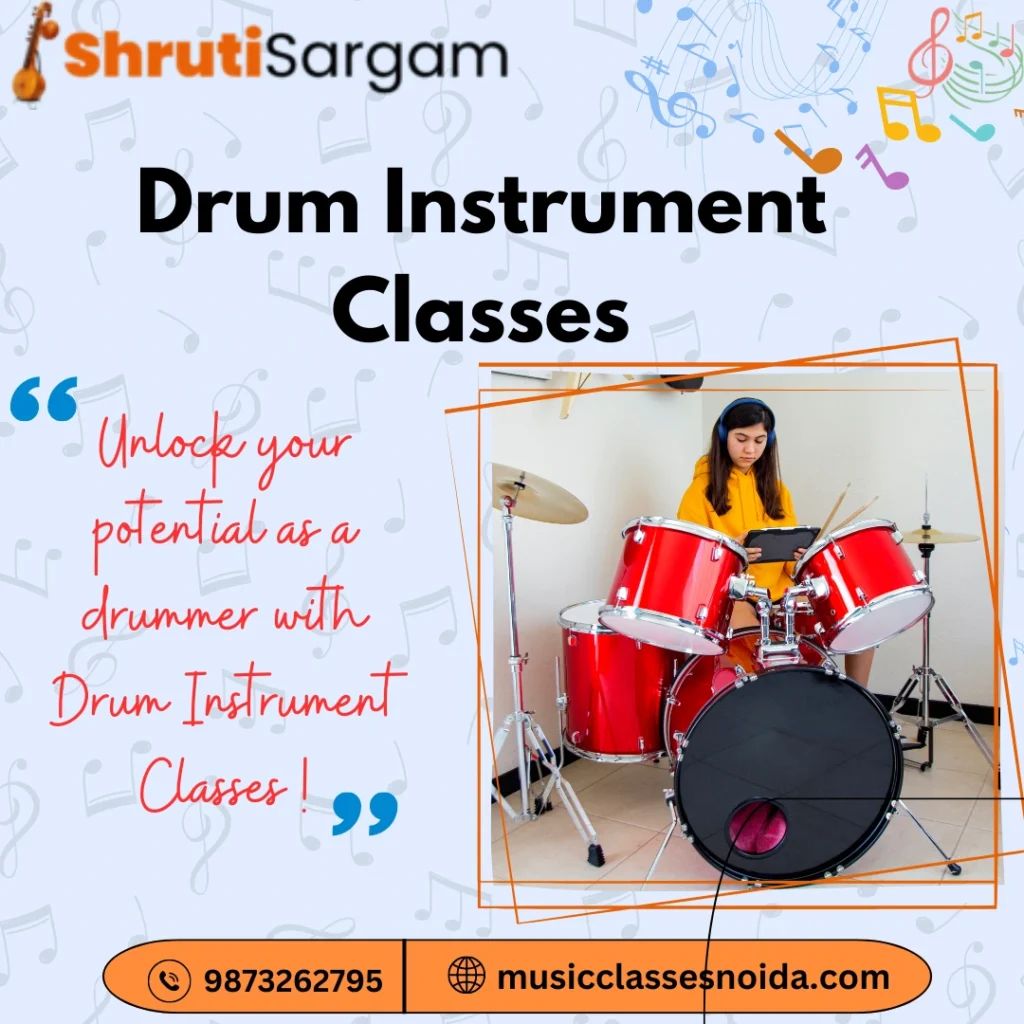
Drum instrumental classes in Noida are designed to teach students how to play the drums from the very basics, including proper technique, hand placement, and rhythm. These classes cater to students of all skill levels, from complete beginners to experienced drummers looking to refine their technique or expand their musical horizons.
One of the best things about drum instrumental classes is that they can be customized to fit your individual needs and goals. Whether you’re interested in playing in a band, performing solo, or just jamming with friends, a good drum instructor can help you develop the skills and confidence you need to achieve your musical aspirations.
Drum instrument classes in Noida usually cover the fundamentals of drumming and percussion, such as technique, rhythm, timing, and musical theory. Students may learn depending on the level and type of class:
Basic drumming techniques: Basic drumming techniques include how to hold and use drumsticks, strike the drumhead and produce various sounds, and keep a steady rhythm.
Music notation: Learning to read drum sheet music is essential for understanding musical theory and playing with other musicians.
Rudiments: Rudiments are basic patterns and exercises that help students develop their skills and playing technique.
Different styles of drumming: Drum classes may concentrate on various styles of drumming, such as rock, jazz, Latin, or African drumming. Students will learn the fundamental rhythms and techniques of each style.
Playing in a band or ensemble: Drum classes may also focus on playing in a group setting, where students learn to play along with other instruments and improve their timing and coordination.
Highlights
| Fact | Description |
| Instrument | Drum |
| Origin | Africa |
| Types | Snare drum, bass drum, tom-tom, floor tom, cymbals, hi-hat |
| Playing technique | Stick grip, finger technique, brush technique |
| Drum notation | Uses standard sheet music notation with unique symbols |
| Famous drummers | Neil Peart, Dave Grohl, Sheila E., Travis Barker, Buddy Rich |
| Health benefits | Improves coordination, reduces stress, increases stamina |
| Musical genres | Rock, jazz, funk, pop, blues, Latin, reggae, hip-hop |
| Percussion family | Part of the idiophone and membranophone categories |
| Evolution of drums | Developed from ancient hand-held percussive instruments |
About Drum Instrument
Drums are a type of musical instrument that generates sound by vibrating a stretched membrane or drumhead. They are one of the world’s oldest musical instruments, having been used by various cultures throughout history.
The drumhead, the shell or body of the drum, and the hardware that holds the drumhead in place are the three basic components of a drum. The drumhead, which is stretched over the top of the drum shell, is typically made of animal skin, plastic, or synthetic materials. The drum shell, which can be made of wood, metal, or synthetic materials, is designed to resonate and amplify the sound of the drumhead.
Drums can produce a wide range of sounds and rhythms when played with sticks, mallets, or the hands. They are used in a variety of musical styles, including rock, jazz, blues, pop, and world music.
Types Of Drum Instruments
There are numerous types of drum instruments, each with its own distinct sound and characteristics. Some of the most common types of drum instruments are:
Bass Drum: The bass drum is a large, low-pitched drum that is usually played with a foot pedal. It is a standard component of most drum sets and is used to add a deep, rhythmic pulse to music.
Snare drum: This is a high-pitched drum known for its snappy, buzzing sound. It is commonly played with drumsticks and is an essential component of most drum sets.
Tom Toms: Tom-toms are medium-sized drums that are typically mounted on stands or attached to a drum kit. They are available in a variety of sizes and pitches, and are used to create melodic patterns and fills.
Congas: Congas are tall, narrow drums that are played with one’s hands. They come in a variety of sizes and are primarily used in Latin American music.
Bongos: Bongos are small, hand-held drums that are sold in pairs. They are commonly used in Latin American and African music and are played with the hands.
Djembe: A large, hand-held drum originally from West Africa. It’s played with your hands and makes a deep, resonant sound.
Timpani: Timpani are large kettle-shaped drums used in classical orchestral music. They are usually played with mallets and can produce a wide range of tones.
Steel Drums: Steel drums are a type of melodic percussion instrument native to the Caribbean. They are constructed out of metal oil drums and are played with mallets.
Taiko drums: Taiko drums are large traditional Japanese drums played with wooden sticks. They are frequently used in martial arts demonstrations and other cultural events.
These are only a few of the many different types of drum instruments available. Each type of drum has its own distinct sound and is used in a variety of musical styles around the world.
Components Of Drum
The components of a drum instrument vary depending on the type of drum and its intended use, but in general, the following are the main components of a drum:
Drum shell: The main body of the drum, made of wood, metal, or synthetic materials. The drum shell is intended to amplify and resonate the sound produced by the drumhead.
Drumhead: The thin membrane that covers the top of the drum shell and vibrates to produce sound when struck. Drumheads are typically made of animal skin, synthetic materials, or a mix of the two.
Rim: The rim is the metal ring that holds the drumhead to the shell. It also serves as a surface for the drummer’s drumsticks to strike.
Lugs: Lugs are small metal components attached to the drum shell that keep the tension rods in place. To tighten or loosen the drumhead, tension rods are used.
Tension Rods: Tension rods are long metal rods that are threaded into the threaded inserts on the opposite side of the drum shell. They are used to adjust the tension of the drumhead, which affects the drum’s sound and tone.
Bass drum pedal: A foot-operated mechanism that allows the drummer to play the bass drum by pressing a pedal. It is commonly found in drum sets and other percussion setups.
Snare Wires: Snare wires are thin metal wires strung across the bottom of a snare drum to produce a buzzing or rattling sound. They are most commonly found in snare drums, but they can also be found in other types of drums for added sound effects.
Cymbals: Cymbals are metal plates that are usually used in conjunction with drums to form a complete drum set. They are available in a variety of sizes and styles, including hi-hats, crash cymbals, and ride cymbals.
Although there are many other components that can be added or modified to create different types of drums and percussion instruments, these are the main components of a drum instrument.
Future Scope & Job Prospect As Drummer
Drumming is a popular musical activity, and there are numerous opportunities in the music industry for drummers. Here are some potential future opportunities for a drummer:
Live performance: Many drummers work as part of a band or orchestra, performing live shows and concerts. They may also perform in other venues such as clubs, festivals, and events.
Studio recording: Drummers may also work in recording studios, where they provide drum tracks for albums, soundtracks, and other musical projects.
Music education: Some drummers go on to become music teachers, working with students of all ages and skill levels to improve their drumming abilities.
Session musician: Many drummers work as session musicians, providing backup percussion for a wide range of recording artists and bands.
Music production: Some drummers go on to work as music producers, overseeing the recording and production of albums, soundtracks, and other musical projects.
Drum clinics: Some drummers teach drumming clinics and workshops, passing on their knowledge to aspiring drummers and musicians.
Overall, a drummer’s future prospects are determined by their level of skill and experience, as well as their ability to adapt to new opportunities and changing music industry trends.
Drum Classes in Noida
One of the best places to take drum classes in Noida is at Shruti Sargam Sangit Mahavidyalaya, which is one of the leading music schools in the area. They offer a wide range of classes and courses for students of all ages, including drum classes for beginners and advanced students alike. Their experienced instructors are passionate about music and are committed to helping their students achieve their goals.
Drum classes also offer performance opportunities, allowing students to showcase their skills in front of live audiences. This can be a great way to build confidence and connect with other musicians in the area.
Course Highlights
| Course Name | Drum Instrumental Music |
| Total Duration | 6 Years |
| Junior Diploma | 2 Years |
| Senior Diploma | 2 Years |
| B.A. (Instrument) | 2 Years |
| Time | 4 PM to 8 PM |
| M.A. | Optional |
| Age Group | All Age Group |
| Session | 2 Sessions Weekly |
| Mode | Online/Offline |
| Certification | Yes |
| Contact | +91 9873262795 |
To achieve this, Shruti Sargam has created an integrated Drum training curriculum that allows students to learn in great depth and detail while also seeing natural connections between music subject areas, making drum learning more meaningful and effective.
Why Shruti Sargam?
Shruti Sargam has a strong belief in each student’s individual learning process. Some people learn better when they work together, while others benefit from one-on-one attention. Some students begin from scratch, while others benefit from prior experience.
Shruti Sargam teaches online/offline Drum Music classes for beginners, intermediates, and advanced students, as well as percussion. The Drum classes provided are detailed in scale, giving each mood and emotion a definition.
How To Enroll?
If you are interested in enrolling in our course, please call our admission helpline at +91 9873262795 or fill out the form on our website and a specialist will contact you.
Offline and interactive sessions make music learning classes in Noida highly effective.
FAQs
Q. What is a drum instrument?
A. A drum instrument is a percussion instrument that produces sound when struck with a stick or mallet, or when hit with the hand.
Q. What are the different types of drum instruments?
A. Drum instruments come in a variety of shapes and sizes, including the bass drum, snare drum, tom-toms, congas, bongos, and others.
Q. Do I need formal training to play the drum instrument?
A. Formal training is always necessary and it is helpful in developing your skills and technique on the drum instrument.
Q. How long does it take to learn how to play the drum instrument?
A. The time it takes to learn to play the drums is determined by a number of factors, including your natural aptitude, the amount of time you spend practising, and the level of instruction you receive. Most people can learn the basics of the drum instrument in a few months with regular practise and dedication.
Q. Which is the best classes for drum training in Noida?
A. Shruti Sargam teaches online/offline Drum Music classes for beginners, intermediates, and advanced students, as well as percussion. The Drum classes provided are detailed in scale, giving each mood and emotion a definition.