
Classical Dance Classes in Noida provide students with a dance training curriculum that allows them to learn in great depth and detail while also noticing natural connections between dance subject areas, making Classical learning more meaningful and effective.
Classical dancing is a lovely art form that has long been a part of Indian culture. It is a graceful, elegant, and rhythmic expression that demands a great deal of attention, practice, and expertise to achieve. If you live in Noida and wish to learn classical dance, you are in luck because the city has many classical dance classes.
Classical dance classes in Noida are available to people of all ages and skill levels, from beginners to expert students. These classes teach Bharatanatyam, Kathak, Kuchipudi, Odissi, and Mohiniyattam, among other classical dance forms. Each dance form has its own distinct style, techniques, and expressions, but they all have their roots in Indian classical music and mythology.
About Classical Dance
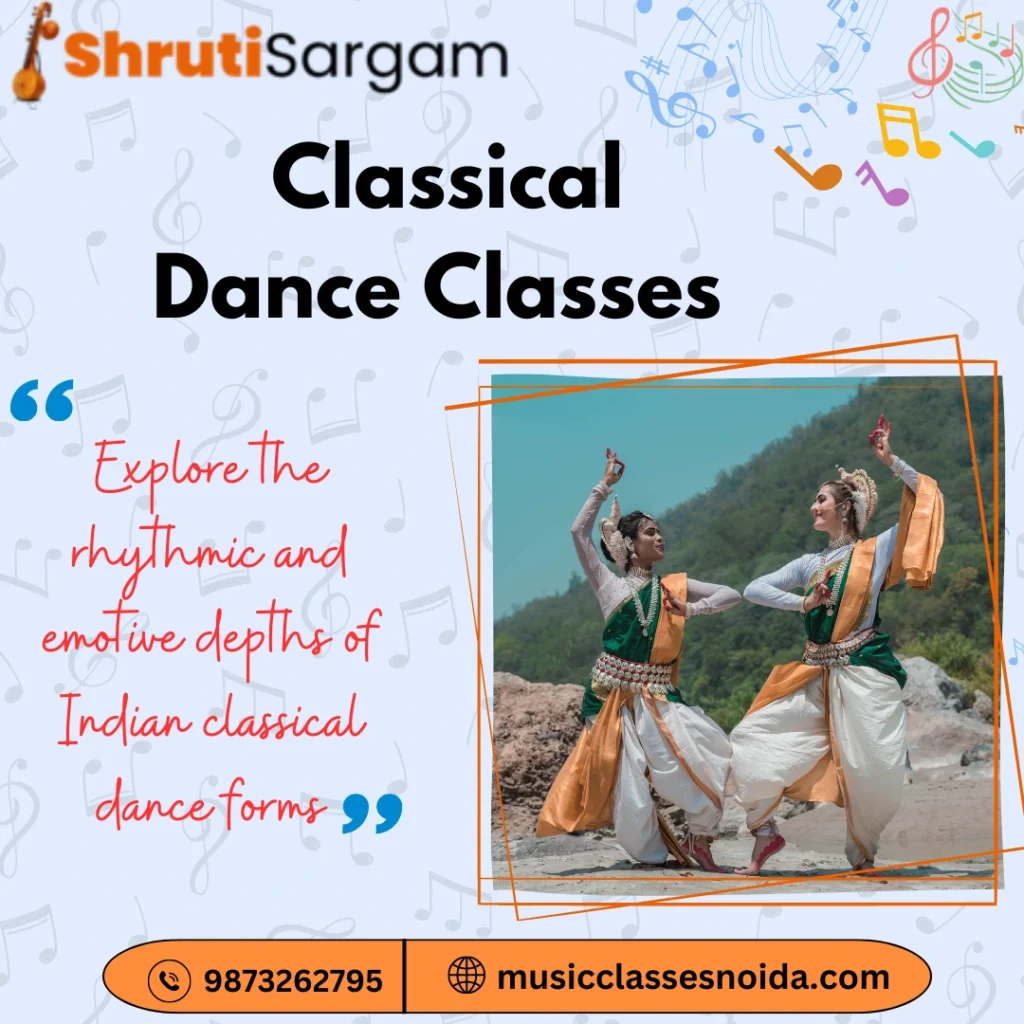
Classical dance, also known as Shastriya Nritya, is a broad term for a variety of performance arts rooted in Hindu musical theatre styles, the theory and practice of which can be traced back to the Sanskrit text Natya Shastra. Depending on the source and scholar, the number of classical dances ranges from eight to more. Bharatanatyam, Kathak, Kuchipudi, Odissi, Kathakali, Sattriya, Manipuri, and Mohiniyattam are the eight dance forms recognised by the Sangeet Natak Academy.
Classical dance is usually performed by a professional dancer who has had a lot of practice in that specific style of Indian classical dancing. Professional dancers in Indian classical dancing usually dance to the beat of the song or sound that is playing. They flow by moving their bodies to the beat of the music. They usually sync their movement and coordination with whatever sound or song they are listening to. The dancer adopts the character from the song or sound and becomes emotionally connected to the story and the audience.
Highlights
| Category | Facts |
| Origin | Classical dance originated in ancient India and has been part of Indian culture for centuries. |
| Dance forms | There are eight classical dance forms recognized by the Sangeet Natak Akademi: Bharatanatyam, Kathak, Kuchipudi, Manipuri, Mohiniyattam, Odissi, Sattriya, and Kathakali. |
| Types of Texts | Classical dance is often studied and analyzed through ancient texts, including Natya Shastra, Abhinaya Darpana, Abhinava Bharati, Natya Darpana, and Bhava Prakasa. These texts provide guidance on various aspects of dance, including technique, expression, and costume. |
| Music | Classical dance is accompanied by classical Indian music, which has a rich history and tradition of its own. |
| Costumes | Classical dance costumes are colorful and intricate, often featuring traditional designs and embellishments. |
| Mudras | Classical dance incorporates hand gestures called mudras, which are used to convey various emotions and meanings. |
| Training | Classical dance requires years of rigorous training and practice to master, and involves physical conditioning, choreography, and expression. |
| Significance | Classical dance is not only a form of art and entertainment, but is also considered a means of spiritual and personal growth in Indian culture. |
Types Of Classical Dance
- Bharatanatyam: Bharatanatyam is a popular Indian classical dance style that originated in Tamil Nadu. It is one of the eight widely recognised Indian classical dance forms that expresses South Indian religious themes and spiritual ideas, particularly those of Shaivism and Hinduism in general.
- Kathak: Kathak is one of India’s eight major classical dance forms. [1] It is an Uttar Pradesh classical dance form. Kathak is said to have originated with travelling bards known as Kathakars or storytellers in ancient northern India.
- Kathakali: Kathakali is a popular classical Indian dance form. It is an art form known as “story play,” but it is distinguished by the elaborately coloured make-up and costumes worn by the traditional male actor-dancers. It is indigenous to Kerala’s Malayalam-speaking southwest region and is almost entirely practised and appreciated by Malayali people.
- Kuchipudi: Kuchipudi is one of India’s eight major classical dances. It is named after the village of Kuchipudi in the Indian state of Andhra Pradesh. Kuchipudi is a dance-drama performance that derives from the ancient Hindu Sanskrit text Natya Shastra.
- Manipuri: The Manipuri Dance, also known as the Manipuri Raas Leela, is one of the eight major Indian classical dance forms that originated in Manipur. The dance form is imbued with the devotional themes of Radha-Madhura Krishna’s Raas and is distinguished by gentle eyes and soft peaceful body movements. The facial expressions are mostly peaceful, expressing Bhakti Rasa or the emotion of devotion, regardless of whether the dancer is Hindu or not.
- Mohiniyattam: Mohiniyattam is an Indian classical dance form that originated and flourished in the state of Kerala. Kathakali is another Kerala classical dance form. Mohiniyattam dance is named after Mohini, a historical enchantress avatar of the Hindu God Vishnu who aids in the triumph of good over evil by developing her feminine powers.
- Odissi: Odissi, also known as Orissi in ancient literature, is a major ancient Indian classical dance that originated in the temples of Odisha, India’s eastern coastal state. Odissi was traditionally performed by women and expressed religious stories and spiritual ideas, particularly of Vaishnavism, through songs written and composed by ancient poets of the state according to the ragas and talas of Odissi music.
- Sattriya: Sattriya, also known as Sattriya Nritya, is a major Indian classical dance form. This dance was originally created as part of Bhaona, which are performances of Ankiya Nat, one-act plays created by Sankardev, an Assamese polymath from the 15th-16th centuries. These dances are still practised by Sattras, which are communities of live-in devotees who follow the Ekasarana dharma, the religion founded by Sankardev.
Difference Between Classical Dance
While the use of mudras (hand gestures) and the importance of facial emotions are shared by all eight classical dance styles, each form has its own distinct style, movements, and expressions. The origins, costumes, music, and themes of the numerous dance genres distinguish them. Kathakali, for example, is noted for its intricate makeup and costumes, but Manipuri is known for its delicate and beautiful movements.
Benefits Of Classical Dance
Classical dance has been used for centuries as a form of expression, communication, and storytelling. But that isn’t all. Classical dance has a variety of physical and mental benefits.
Classical dance classes provide students of all ages with several physical, mental, and cultural benefits. Here are some of the most important advantages of learning classical dance:
A. Physical and mental advantages of classical dance training
Classical dancing is a great kind of exercise that helps with strength, flexibility, and stamina. It also aids in the development of coordination, balance, and posture, as well as the improvement of general fitness and cardiovascular health. Regular classical dance practice can also promote mental health by lowering stress and anxiety and increasing feelings of enjoyment and well-being.
B. Growth in self-expression and creativity
Students in classical dance classes are encouraged to express themselves creatively via movement and music. Learning classical dance fosters artistic expression and encourages pupils to explore their own distinct style and personality. It also enables pupils to express themselves freely in a caring and nurturing setting, which helps foster confidence and self-esteem.
C. Increased cultural awareness and appreciation
Classical dance is profoundly ingrained in Indian culture, and practising it can assist improve cultural knowledge and appreciation. Students get a deeper grasp of India’s rich cultural legacy by learning about the history, traditions, and customs of Indian classical dance. This can also contribute to a greater appreciation and knowledge of various cultures and traditions.
D. Performance and talent-showcasing opportunities
Students in classical dance training have the opportunity to perform and demonstrate their talent in front of an audience. This can be an exciting and fulfilling experience that can help you gain confidence and self-assurance.
Classical dance also helps students establish stage presence and teaches them how to connect with their audience via movement and expression. Many classical dance programmes also provide opportunities for students to compete and participate in festivals, which can help students refine their talents and expose their talent to a larger audience.
Classical Dance Classes
Classical dance classes provide a unique opportunity to learn about and appreciate Indian classical dance styles’ rich tradition and cultural legacy. If you live in Noida, you can look into classical dance classes, such as those given by Shruti Sargam Sangit Mahavidyalaya.
These sessions are taught by skilled instructors who love to dance and teach. They provide tuition in several classical dance styles such as Bharatanatyam, Kathak, Kuchipudi, Odissi, and Mohiniyattam, as well as a personalised approach to learning that caters to each student’s specific needs and ability levels.
Students in these workshops not only learn dance basics, but they also get to explore Indian classical music, costume design, and the cultural significance of each dance genre. Students can improve their talent and enjoy the delight of classical dance with devotion and practise.
About Shruti Sargam
Shruti Sargam Sangit Mahavidyalaya, Dance & Musical Classes in Greater Noida (Affiliated to Prayag Sangit Samiti Prayagraj Regd.no. UPD 551) is one of the top music & dance schools in India and Delhi NCR, offers short term certificate level hobby course classes in dance and music, especially designed with a modern approach for teaching music and dance to kids, children and young adults, school and college students and for Television reality music show / competition participants.
Shruti Sargam is an initiative that teaches and promotes talented Indian musicians and dancers in order to help them build long-term careers. At Shruti Sargam, we teach music and dance in a holistic manner, allowing students to gain a deeper understanding of these intricate art forms.
Why Shruti Sargam?
We have a strong belief in each student’s individual learning process. Some people learn better when they work together, while others benefit from one-on-one attention. Some students begin from scratch, while others benefit from prior experience.
Shruti Sargam teaches online/offline Classical Dance classes for beginners, intermediates, and advanced students, as well as percussion. The Classical Dance classes provided are detailed in scale, giving each mood and emotion a definition. They intend to teach not only dancing but also facial expressions.
Shruti Sargam is regarded as one of the best Classical dance classes in Noida and Delhi, providing professional practical and theoretical training in Classical dance and its associated disciplines with the goal of producing the next generation of professionals.
Our qualified and trained teachers have been practising and specialising in the individual art form for many years. We not only provide regular class sessions, but also opportunities for aspirants to demonstrate their skills.
How To Enroll?
If you are interested in enrolling in our course, please call our admission helpline at +91 9873262795 or fill out the form on our website and a specialist will contact you.
Conclusion
Students can study and enjoy the beauty, grace, and rich cultural history of Indian classical dance through classical dance classes in Noida. There are numerous classical dance genres to choose from, ranging from Bharatanatyam to Kathak, Kuchipudi to Mohiniyattam, each with its own distinct style, technique, and cultural significance.
Students who practise classical dance not only benefit physically and mentally, but they also develop self-expression and creativity, cultural understanding and appreciation, and possibilities for performance and showing their talent.
Students can learn from skilled and dedicated instructors in a caring and nurturing environment at Shruti Sargam Sangit Mahavidyalaya. Whether you are a beginner or a seasoned dancer, classical dance classes in Noida provide a rewarding and enriching experience.
A well-designed curriculum helps students progress faster at a music learning institute in Noida.
FAQs
Q. What are the different types of classical dance forms?
A. There are eight classical dance forms recognized by Sangeet Natak Akademi, which include Bharatanatyam, Kathak, Kuchipudi, Manipuri, Mohiniyattam, Odissi, Sattriya, and Kathakali.
Q. What are the benefits of learning classical dance?
A. Learning classical dance offers physical and mental benefits such as improved strength, flexibility, coordination, and mental well-being. It also promotes creativity, cultural awareness, and provides opportunities for showcasing talent.
Q. Do I need any prior experience to join classical dance classes?
A. No, you do not need any prior experience to join classical dance classes. Most institutes offer classes for beginners as well as advanced learners.
Q. What is the duration of each class and how many classes are held per week?
A. The duration of each class can vary from 1-2 hours, and the number of classes held per week can also vary depending on the level of the class.
Q. What is the age limit for joining classical dance classes?
A. There is no specific age limit for joining classical dance classes, as classes are offered for students of all ages.
Q. What is the fee structure for classical dance classes in Noida?
A. The fee structure can vary depending on the level of the class and the duration of the course. It is advisable to check with the institute directly for more information on the fee structure.
Q. Do classical dance classes offer performance opportunities?
A. Yes, classical dance classes offer performance opportunities, including participation in competitions and festivals, as well as recitals and stage performances.
Q. What are the eight Classical Dances?
A. The number of classical dances varies from eight to more, depending on the source and scholar. The Sangeet Natak Academy recognises eight dance forms: Bharatanatyam, Kathak, Kuchipudi, Odissi, Kathakali, Sattriya, Manipuri, and Mohiniyattam.
Q. Which is India’s first Classical Dance form?
A. Bharatanatyam was the first of India’s Classical dances to be refashioned as a theatre art form and to be widely exhibited both at home and abroad.
Q. What is the Classical Dance form?
A. Classical Indian Dance is a type of dance that originated during India’s classical periods. This dance style is typically performed to classical music and features elaborate costumes, lavish sets, and dramatic movements.
Q. What is the importance of Classical Dance?
A. Classical dance is a fundamental form of art because it is based on classical ballet and opera. These dance forms have a long and illustrious history in ancient Greece and Rome. Classical dance is a performance art that is used for both education and performance. For centuries, it has been used to teach children about classical ballet and opera history and beauty. Classical dance has also been used as a form of performance art.