
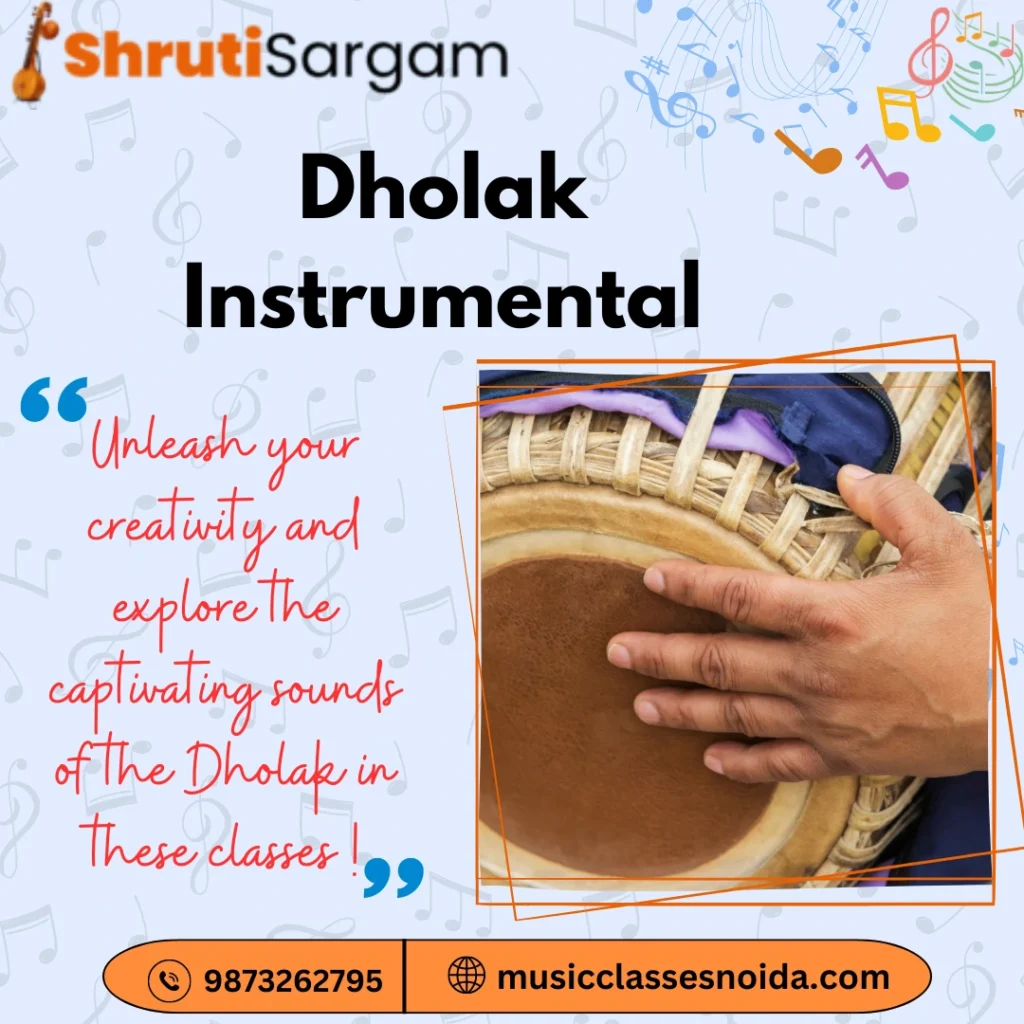
Dholak instrumental classes in Noida are a great way to learn this traditional Indian percussion instrument. The dholak is a two-headed drum that is commonly used in North Indian folk music and is a staple of celebrations like weddings and festivals. If you have ever been to a Bhangra performance or a traditional Indian wedding, you have likely heard the distinctive sound of the dholak.
At dholak instrumental classes in Noida, you can learn the basics of playing this unique instrument from experienced teachers who have a deep understanding of Indian music and culture. These classes cater to students of all ages and skill levels, so whether you are a complete beginner or an experienced musician looking to expand your skills, you can find a class that suits your needs.
Whether you are interested in learning the dholak for personal enjoyment, to perform at cultural events, or to expand your musical repertoire, dholak instrumental classes in Noida are an excellent choice. With experienced teachers, a supportive learning environment, and a deep appreciation for Indian music and culture, you can discover the joy of playing this unique and vibrant instrument.
Highlights
| Fact | Description |
| Instrument | The dholak is a traditional Indian percussion instrument that consists of two drum heads, one larger and one smaller, connected by a wooden body. |
| Origins | The dholak originated in North India and is commonly used in folk music and celebratory events like weddings and festivals. |
| Techniques | Playing the dholak involves a combination of hand and finger movements, with different techniques used to produce different sounds and rhythms. |
| Musical Styles | The dholak is used in a variety of musical styles, including Bhangra, Qawwali, and other forms of traditional Indian music. |
| Importance | The dholak is an important instrument in Indian culture and is often used to provide rhythm and energy in musical performances. |
| Classes | Dholak instrumental classes offer instruction on the basics of playing the instrument, including hand and finger placement, stroke techniques, and rhythmic patterns. |
| Skill Level | Dholak instrumental classes cater to students of all skill levels, from complete beginners to experienced musicians looking to expand their repertoire. |
| Benefits | Learning to play the dholak can improve hand-eye coordination, rhythm, and musicality, as well as provide a deeper understanding and appreciation of Indian music and culture. |
| Instruments Provided | Many dholak instrumental classes provide instruments for students to use during the class, making it easier for beginners to get started without having to invest in their own instrument. |
| Performance Opportunities | Some dholak instrumental classes offer performance opportunities, giving students a chance to showcase their skills and connect with the wider Indian music community. |
About Dholak
The dholak is a two-headed hand drum that is used as a folk percussion instrument. The 45 cm long and 27 cm wide instrument is commonly used in qawwali, kirtan, lavani, and bhangra. The drum has two different sized drumheads. The smaller drumhead is made of goat skin for sharp notes, while the larger drumhead is made of buffalo skin for low pitch. The two drumheads allow for the combination of bass and treble, as well as rhythmic high and low pitches. The Dholak’s body, or shell, is made of sheesham or mango wood.
It is commonly used in qawwali, kirtan, lavani, and bhangra. It was previously used in classical dance. It is frequently used in Filmi Sangeet (Indian film music), chutney music, chutney-soca, baitak gana, taan singing, bhajans, and local Indian folk music.
To achieve this, we created an integrated dholak training curriculum that allows students to learn in great depth and detail while also seeing natural connections between music subject areas, making dholak learning more meaningful and effective.
Learning Dholak not only increase skill but also develop advantages shared below:
- Improves intellectual fitness
- Improves Sleep
- Increase Motivation
- Boosts Your Immune and Reduces pain
Types Of Dholak
Different types of dholak instruments are popular in different parts of India. Here are a few examples of the most common types:
Punjab Dholak: The most popular dholak in North India, particularly in Punjab. It has a slightly larger size and a deep, resonant sound.
Bengali Dholak: This dholak is smaller in size than the Punjab dholak and is commonly used in Bengal. It emits a high-pitched sound.
Maharashtrian Dholak: This dholak is larger in size than the Bengali dholak and is popular in Maharashtra. It has a deep, bass sound.
Khol: A two-sided drum that is popular in North India and Nepal. It is played with two sticks and has a cylindrical shape. One side generates bass, while the other generates treble.
Dhol: A large drum that is popular in North India, particularly in Punjab. It’s played with two sticks and has a deep, resonant sound.
Nagara: A large, double-headed drum popular in Rajasthan and other parts of Northern India. It is played with two sticks and has a deep, loud sound.
These are just a few of the many different types of dholak instruments available. Each dholak has its own distinct characteristics and is best suited to specific musical styles.
Dholak Playing Style
The dholka is either played on the player’s lap, slung from the shoulder or waist while standing, or pressed down with one knee while sitting on the floor.
An iron thumb ring is used in some styles of playing (such as Punjab) to produce a distinct “chak” rim sound. All fingers are typically used in other styles (such as Rajasthani).
Future Scope & Job Prospectus
Dholak is a popular percussion instrument in Indian music, and there are numerous opportunities in the music industry for dholak players. A dholak player’s potential future scopes and job prospects are as follows:
Live performance: Many dholak players work as part of a band or orchestra, performing live shows and concerts. They may also perform in other venues such as clubs, festivals, and events.
Studio recording: Dholak players may also work in recording studios as percussionists for albums, soundtracks, and other musical projects.
Music education: Some dholak players go on to become music teachers, working with students of all ages and skill levels to help them improve their dholak skills.
Session musician: Many dholak players work as session musicians, providing backup percussion for a wide range of recording artists and bands.
Music production: Some dholak players go on to work as music producers, overseeing the recording and production of albums, soundtracks, and other musical projects.
Cultural events: Dholak players can find work in a variety of cultural events, religious ceremonies, and festivals.
Overall, a dholak player’s future prospects are determined by their level of skill and experience, as well as their ability to adapt to new opportunities and changing trends in the music industry. Dholak players are in high demand, particularly in Indian folk and classical music. Dholak players can make a successful career in the music industry with dedication and hard work.
Dholak Classes in Noida
If you’re looking for dholak classes in Noida, there are a number of great options to choose from. One of the best dholak classes in the area is Shruti Sargam Sangit Mahavidyalaya, which offers high-quality instruction in traditional Indian music.
At Shruti Sargam Sangit Mahavidyalaya, students can learn the basics of playing the dholak, including hand and finger placement, stroke techniques, and rhythmic patterns. The classes cater to students of all skill levels, from complete beginners to advanced musicians looking to expand their repertoire. With experienced instructors and a supportive learning environment, Shruti Sargam Sangit Mahavidyalaya is an excellent choice for anyone interested in learning the dholak.
Shruti Sargam Sangit Mahavidyalaya also offers classes in a variety of other traditional Indian instruments, as well as vocal instruction, dance classes, and more. The school is committed to preserving and promoting traditional Indian music and culture, and provides students with a deep understanding and appreciation of this rich musical heritage.
Whether you’re interested in learning the dholak for personal enjoyment or to perform at cultural events, Shruti Sargam Sangit Mahavidyalaya is an excellent choice. With convenient class schedules, affordable tuition, and a supportive community of fellow musicians, this dholak class is a great way to learn and grow as a musician.
Why Shruti Sargam?
Shruti Sargam have a strong belief in each student’s individual learning process. Some people learn better when they work together, while others benefit from one-on-one attention. Some students begin from scratch, while others benefit from prior experience.
Shruti Sargam teaches online/offline Dholak classes for beginners, intermediates, and advanced students, as well as percussion. The dholka classes provided are detailed in scale, giving each mood and emotion a definition. They intend to teach not only music but also vocal expressions.
How To Enroll?
If you are interested in enrolling in our course, please call our admission helpline at +91 9873262795 or fill out the form on our website and a specialist will contact you.
Parents looking for quality education often choose music classes for kids in Noida.
FAQ
Q. Is Dholak hard to learn?
A. Dholak is a great option to understand the music and it’s instrument, while learning depends from the mode you’re choosing.
Q. How much time does it take to learn Dholak?
A. It can take nearly three years of learning to master it for someone who pursues it professionally. Prepare to spend at least a year, if not a year and a half, learning the fundamentals of dholak.
Q. What is the career options for professional dholak player?
A. Dholak has a long history and many non-linear compositions, which can be difficult for a new artist to grasp. This is a major undertaking that necessitates a great deal of comprehension, patience, deliberation, and passion.
Q. Can I make dholak player as a career?
A. India is becoming known for producing outstanding classical vocalists and instrumentalists. The days of learning music for monetary gain or social recognition are long gone. By studying music, children from wealthy families are becoming music maestros. Music is now a profitable profession, and gender barriers have also been broken down. Girls have been spotted in the dholak field.
Q. What is a dholak?
A. A dholak is a traditional Indian percussion instrument with a cylindrical wooden body and two animal skin drumheads. It’s done with your bare hands.
Q. What types of music are typically played with the dholak?
A. The dholak is used in a wide range of traditional Indian music styles, including folk, classical, devotional, and film music.
Q. How do I learn to play the dholak?
A. You can learn to play the dholak by taking lessons from a qualified teacher, either in person or online. It is also helpful to practice regularly and listen to recordings of skilled dholak players.